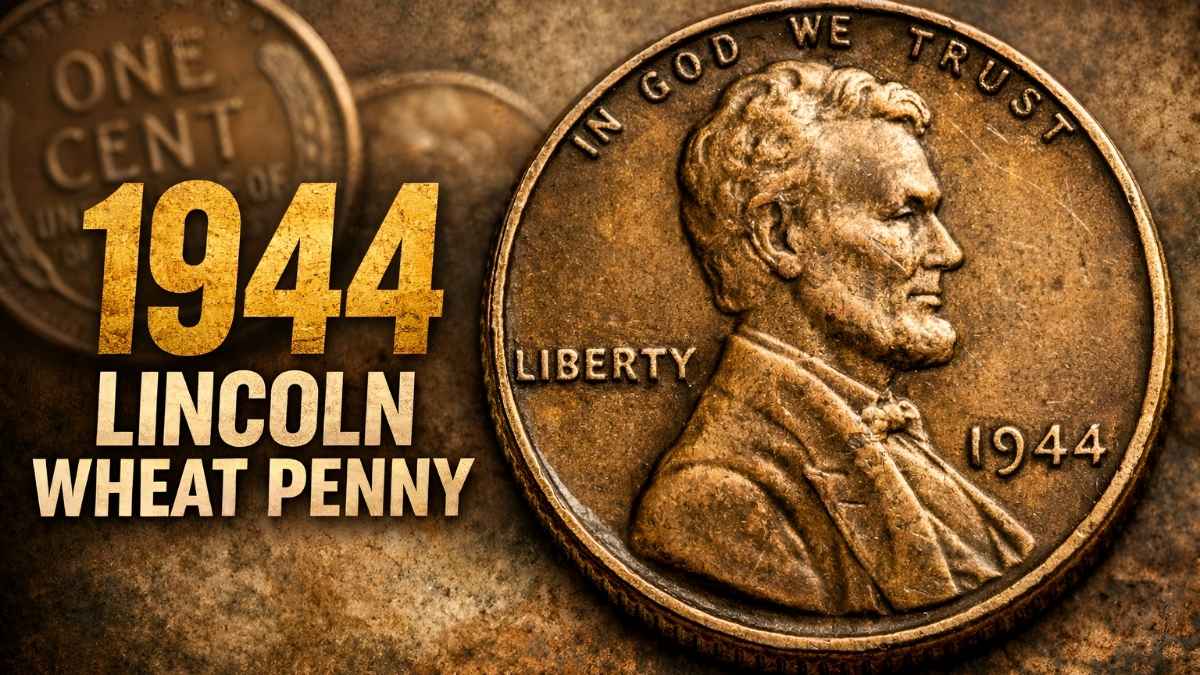
1944 Lincoln Wheat Penny 2026: The 1944 Lincoln Wheat penny is one of the most fascinating coins in American numismatics. Minted during World War II, it reflects both historical significance and collectible appeal. In 2026, collectors continue to seek out these coins, not only for their affordability but also for the rare varieties and minting errors that can transform an ordinary penny into a highly valuable treasure.
Historical Background
After the steel cents of 1943, which were produced to conserve copper for the war effort, the U.S. Mint returned to the traditional bronze composition in 1944. This alloy consisted of 95 percent copper and 5 percent tin and zinc. Over 1.4 billion pennies were struck that year across three mints, making the 1944 issue one of the most abundant in circulation. Despite the large mintage, certain varieties and conditions remain highly desirable.
Mint Marks and Varieties
Collectors distinguish 1944 pennies by their mint marks:
- 1944 (Philadelphia, no mint mark): The most common variety, widely available in circulation.
- 1944‑D (Denver): Produced in large numbers but valued higher in uncirculated grades.
- 1944‑S (San Francisco): Scarcer than the other two, commanding premiums in better condition.
Value Chart (2026 Estimates)
Values vary depending on grade and mint mark.
| Condition | 1944 (P) | 1944‑D | 1944‑S |
|---|---|---|---|
| Good (G‑4) | $0.05 | $0.10 | $0.15 |
| Fine (F‑12) | $0.12 | $0.20 | $0.25 |
| Very Fine (VF‑20) | $0.25 | $0.40 | $0.50 |
| Extremely Fine (EF‑40) | $0.50 | $0.75 | $1.00 |
| About Uncirculated (AU‑50) | $1.25 | $2.50 | $3.00 |
| Uncirculated (MS‑60 to MS‑63) | $6.00+ | $10–$25 | $20–$40 |
Rare errors, such as the 1944 steel penny (a leftover planchet mistake from 1943), can reach values up to hundreds of thousands of dollars depending on grade.
Collector Insights
- Condition is Key: Even small differences in grade can dramatically affect value.
- Mint Mark Matters: The “S” mint mark is scarcer and more desirable in higher grades.
- Error Coins: The 1944 steel penny and doubled die varieties are among the most valuable.
- Authentication: Professional grading by PCGS or NGC adds credibility and ensures accurate valuation.
Investment Potential
While most 1944 pennies are affordable, high‑grade examples and rare errors have strong investment potential. Collectors often seek complete sets by mint mark, and coins in uncirculated condition continue to appreciate in value.

Conclusion
The 1944 Lincoln Wheat penny remains a cornerstone of U.S. coin collecting. With its wartime history, multiple mint varieties, and rare errors, it offers both affordable entry points and high‑value treasures. For collectors in 2026, understanding mint marks, condition, and rarity is essential to unlocking the full potential of this iconic coin.