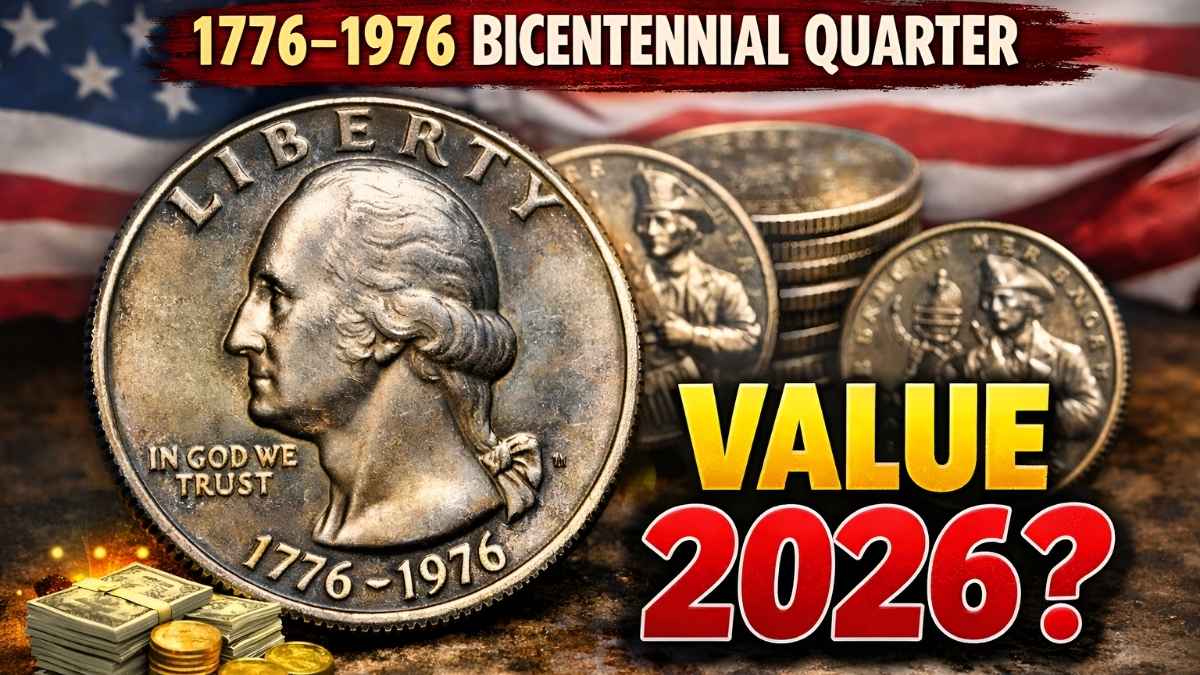
1776–1976 Bicentennial Quarter Value 2026: The Bicentennial quarter was created to honor the 200th anniversary of American independence. Released in 1975 and 1976, it carried the dual date “1776–1976” and featured a colonial drummer on the reverse, designed by Jack L. Ahr. This special design was a departure from the traditional eagle reverse and quickly became a symbol of national pride. Millions were minted, making them common in circulation, yet certain varieties and minting errors have turned into prized collectibles.
Standard Bicentennial Quarters
Most Bicentennial quarters were struck in copper-nickel clad composition at the Philadelphia and Denver Mints. These coins are still widely available and typically hold little premium. Circulated examples are worth face value, while uncirculated coins can bring between $3 and $12 depending on grade. Proof clad versions from the San Francisco Mint are also collectible, usually valued around $5 to $15.

Silver Bicentennial Quarters
The U.S. Mint produced special 40 percent silver Bicentennial quarters, sold in collector sets. These silver issues are more desirable, especially in proof condition. Values range from $10 to $35, with high-grade examples commanding higher prices. Collectors often seek these silver coins as part of complete Bicentennial sets.
Rare Error Varieties
Errors are where the real excitement lies for collectors in 2026. Some of the most notable Bicentennial quarter errors include:
- Doubled die obverse: Doubling on the date or lettering creates a striking effect.
- Off-center strikes: Coins with misaligned designs are rare and visually distinctive.
- Wrong planchet strikes: A few Bicentennial quarters were accidentally struck on foreign or incorrect planchets, making them extremely valuable.
Depending on rarity and condition, these error coins can range in value from $150 to over $5,000.
Proof Bicentennial Quarters
Proof Bicentennial quarters, especially those struck in silver, remain popular among collectors. Produced with polished dies and special planchets, they feature mirror-like surfaces and sharp details. While common proof issues are affordable, coins graded at the highest levels or with unique varieties can bring significant premiums.

Identifying Valuable Bicentennial Quarters
Collectors in 2026 look for several key features when identifying valuable Bicentennial quarters:
- Mintmarks: San Francisco “S” mintmarks indicate proof or silver issues.
- Error details: Doubling, off-center strikes, or unusual planchet mistakes increase value.
- Condition: Coins graded Mint State or Proof 65 and above are far more valuable.
- Composition: Silver-clad issues are worth more than copper-nickel clad examples.
Market Trends in 2026
The collector market for Bicentennial quarters remains strong. While common examples are plentiful, rare errors and silver proofs continue to attract attention. Auction records show pristine error coins selling for thousands, while high-grade silver proofs consistently outperform expectations. Nostalgia tied to America’s bicentennial celebration ensures these coins remain popular among both seasoned collectors and newcomers.
The Thrill of Discovery
Even though millions of Bicentennial quarters were minted, the possibility of finding a rare error or silver issue in circulation keeps collectors searching. The coin’s unique design and historical significance make it a favorite for treasure hunters. In 2026, the excitement of uncovering a valuable Bicentennial quarter in everyday change continues to inspire collectors across the world.