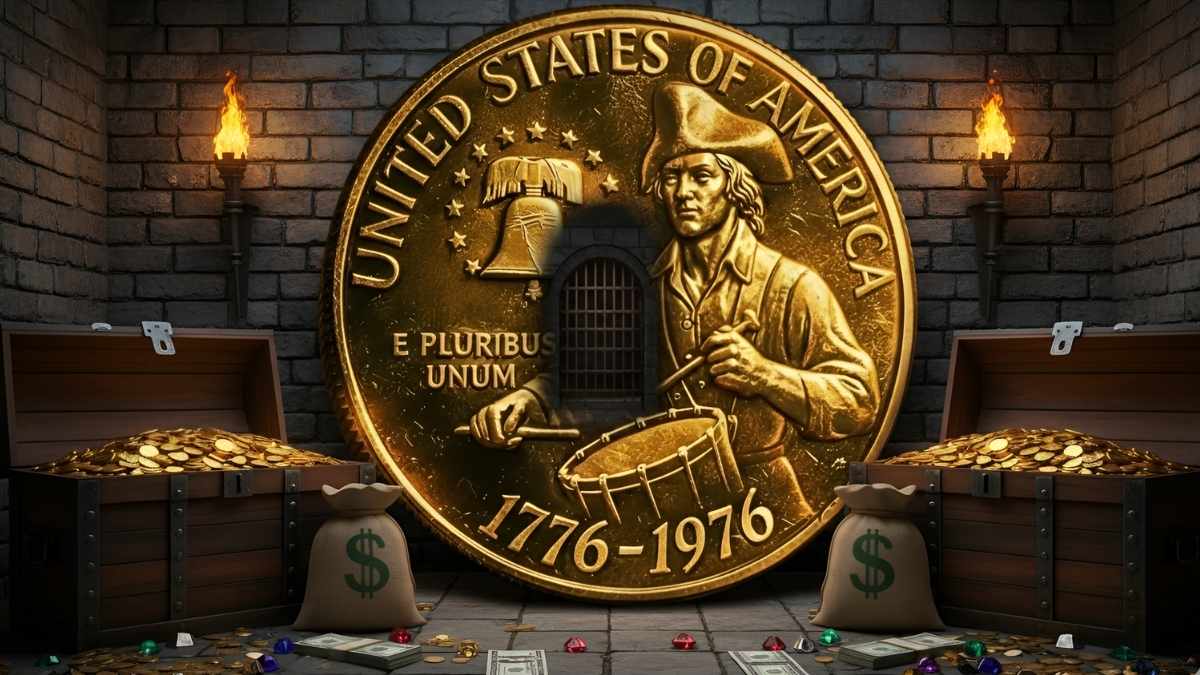
Bicentennial Quarter Value Guide: The Bicentennial quarter, minted in 1975 and 1976 to celebrate the 200th anniversary of American independence, remains one of the most iconic coins in U.S. history. Featuring a colonial drummer on the reverse and the dual date 1776–1976, these quarters were produced in massive numbers, yet some hold surprising value today. Collectors and enthusiasts continue to seek out rare varieties, pristine conditions, and special mintings that elevate their worth far beyond face value.
Historical Background
The Bicentennial coinage program included quarters, half dollars, and dollar coins, each bearing unique designs commemorating the nation’s bicentennial. The quarter, designed by Jack L. Ahr, became the most widely circulated of the trio. While most were struck for everyday use, special proof and silver-clad versions were also produced, making the series appealing to both casual collectors and serious numismatists.
Common Circulation Value
Most Bicentennial quarters found in pocket change today are worth their face value of 25 cents. They were minted in such large quantities that common examples remain abundant. However, condition plays a role. Uncirculated coins or those preserved in mint sets can fetch slightly higher prices, often ranging from 1 to 5 USD depending on grade.
Silver-Clad Versions
The U.S. Mint produced special 40 percent silver Bicentennial quarters for collectors. These were included in proof and uncirculated sets sold directly by the Mint. Today, silver-clad examples often sell for 5 to 15 USD, with pristine proof versions commanding even higher prices. Their intrinsic silver content also adds to their value, especially when silver prices rise.
Proof Coins
Proof Bicentennial quarters, struck with polished dies for sharp detail and mirror-like surfaces, are highly sought after. Depending on condition and certification, proof examples can range from 10 to 30 USD. Deep cameo proofs, which display strong contrast between frosted designs and mirrored fields, are particularly prized.
Rare Varieties and Errors
Certain Bicentennial quarters stand out due to minting errors or unusual varieties. Double die obverses, off-center strikes, and coins struck on the wrong planchets can command significant premiums. Some error coins have sold for hundreds or even thousands of dollars at auction, depending on rarity and demand.
Condition and Grading
Grading plays a crucial role in determining value. Coins graded by professional services such as PCGS or NGC often achieve higher prices due to verified authenticity and condition. Mint State (MS) examples, especially those graded MS67 or higher, can sell for 50 to 200 USD or more. Collectors value sharp details, minimal wear, and strong luster.
Collecting Strategies
For those interested in building a Bicentennial quarter collection, consider focusing on:
- Circulation strikes from Philadelphia, Denver, and San Francisco.
- Silver-clad proof and uncirculated sets.
- Certified high-grade examples.
- Rare error coins.
This approach ensures a well-rounded collection that captures both the historical significance and the numismatic value of the series.
Investment Potential
While most Bicentennial quarters remain common, select varieties and high-grade examples continue to appreciate in value. Collectors who invest in certified coins or rare errors may see long-term gains. However, the true appeal lies in the historical connection and the joy of collecting rather than financial speculation.
Conclusion
The Bicentennial quarter is more than just a commemorative coin. It represents a milestone in American history and remains a beloved collectible. While most examples are worth only face value, silver-clad versions, proofs, high-grade specimens, and rare errors can hold hidden worth. For collectors, the journey of discovering these treasures is as rewarding as the coins themselves.