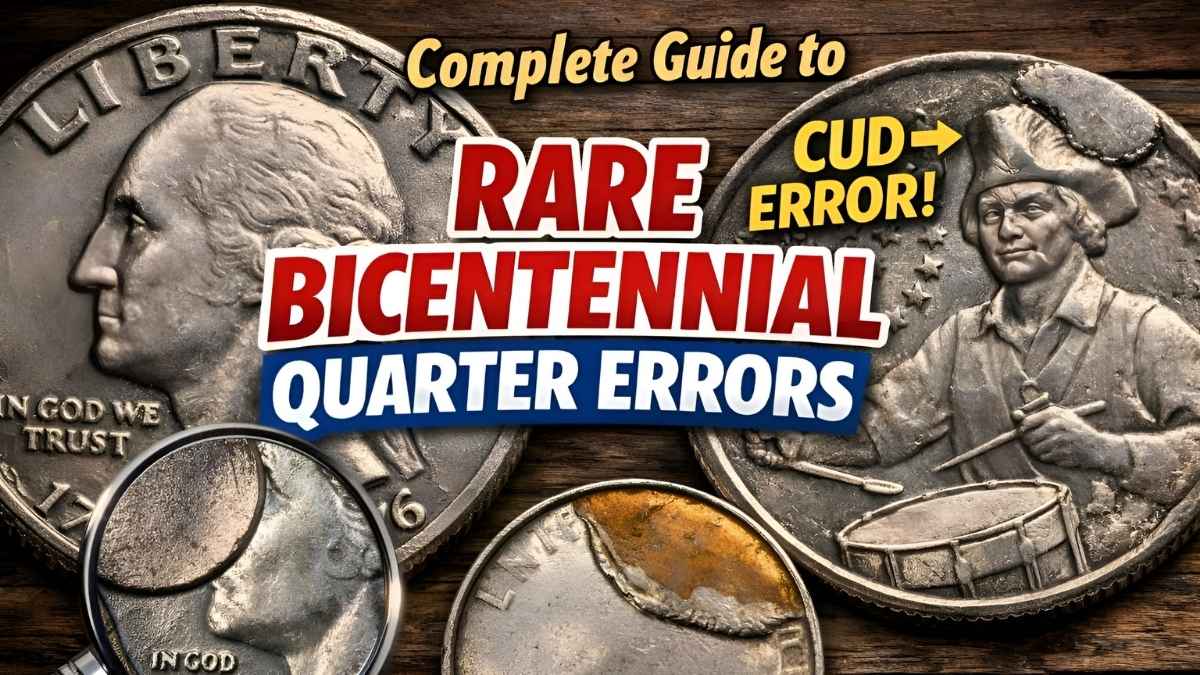
Complete Guide to Rare Bicentennial Quarter Errors: The Bicentennial quarter, released in 1976, is one of the most iconic coins in American history. It was minted to celebrate the 200th anniversary of the signing of the Declaration of Independence. With its unique reverse design featuring a colonial drummer and a torch surrounded by 13 stars, the coin quickly became a favorite among collectors and the general public. While millions were produced, certain rare errors and varieties have turned ordinary pocket change into valuable treasures.
Why Error Coins Fascinate Collectors
Error coins hold a special place in numismatics because they represent mistakes that slipped through the minting process. These errors are often rare, making them highly desirable. Collectors are drawn to them not only for their scarcity but also for the stories they tell about how coins are made. Bicentennial quarters with errors are especially appealing because they combine historical significance with rarity.

Types of Bicentennial Quarter Errors
Several types of errors can be found in Bicentennial quarters. Understanding these categories helps collectors identify potential hidden gems.
Double Die Errors
One of the most famous error types is the double die. This occurs when the coin die strikes the design twice, creating a doubled image. On Bicentennial quarters, doubling can appear on the date, lettering, or drummer’s details. Coins with strong doubling are rare and can command high prices.
Off-Center Strikes
An off-center strike happens when the coin blank is not properly aligned with the die. The result is a coin with part of the design missing or shifted. Bicentennial quarters with significant off-center strikes are scarce and often valued by collectors depending on how much of the design is missing.
Clipped Planchets
A clipped planchet error occurs when the coin blank is improperly cut, leaving a curved or straight clip on the edge. Bicentennial quarters with noticeable clips are unusual and can be worth far more than face value.

Wrong Planchet Errors
Sometimes a coin is struck on a blank intended for another denomination. Bicentennial quarters struck on nickel or dime planchets are extremely rare. These wrong planchet errors are among the most valuable because they combine historical design with a striking mistake.
Die Cracks and Cuds
Die cracks appear as raised lines on the coin’s surface, while cuds are large blobs of metal caused by broken dies. Bicentennial quarters with dramatic die cracks or cuds are collectible, especially if the error affects the drummer design or lettering.

Collector Value of Bicentennial Quarter Errors
The value of an error coin depends on several factors including rarity, condition, and demand. Bicentennial quarters with minor errors may only be worth a few dollars, while major errors can sell for hundreds or even thousands.
Condition Matters
Like all coins, condition plays a critical role. A Bicentennial quarter with a rare error but heavy wear will be less valuable than one in pristine condition. Collectors often seek coins graded by professional services to ensure authenticity and quality.

Market Demand
The popularity of Bicentennial quarters among collectors boosts demand for error varieties. Since these coins are tied to a major historical celebration, they attract both casual hobbyists and serious numismatists.
Rarity Drives Price
The rarer the error, the higher the value. Wrong planchet strikes and dramatic double dies are among the most sought-after, while minor die cracks may be less valuable.

Hidden Gems in Everyday Change
One of the most exciting aspects of collecting Bicentennial quarters is the possibility of finding a rare error in everyday circulation. While most error coins have already been discovered, there are still occasional reports of collectors spotting unusual varieties in pocket change or old coin jars.
Tips for Identifying Bicentennial Quarter Errors
Collectors should carefully examine coins under good lighting and magnification. Look for doubling in the lettering, unusual shapes along the edge, or misaligned designs. Comparing coins side by side can help spot subtle differences.

Preserving and Storing Error Coins
Proper storage is essential to maintain the value of error coins. Collectors should use coin holders or albums that protect against scratches and environmental damage. Avoid cleaning coins, as this can reduce their value.
The Future of Bicentennial Quarter Collecting
Interest in Bicentennial quarters remains strong decades after their release. As more collectors enter the hobby, demand for rare errors continues to grow. These coins not only represent a piece of American history but also offer the thrill of discovering hidden treasures.

Conclusion
Bicentennial quarters are more than just commemorative coins. They are symbols of national pride and historical celebration. When combined with rare minting errors, they become highly valuable collectibles that fascinate both seasoned numismatists and casual hobbyists. Whether you are searching through pocket change or building a serious collection, understanding the types of errors and their values can help you uncover hidden gems.