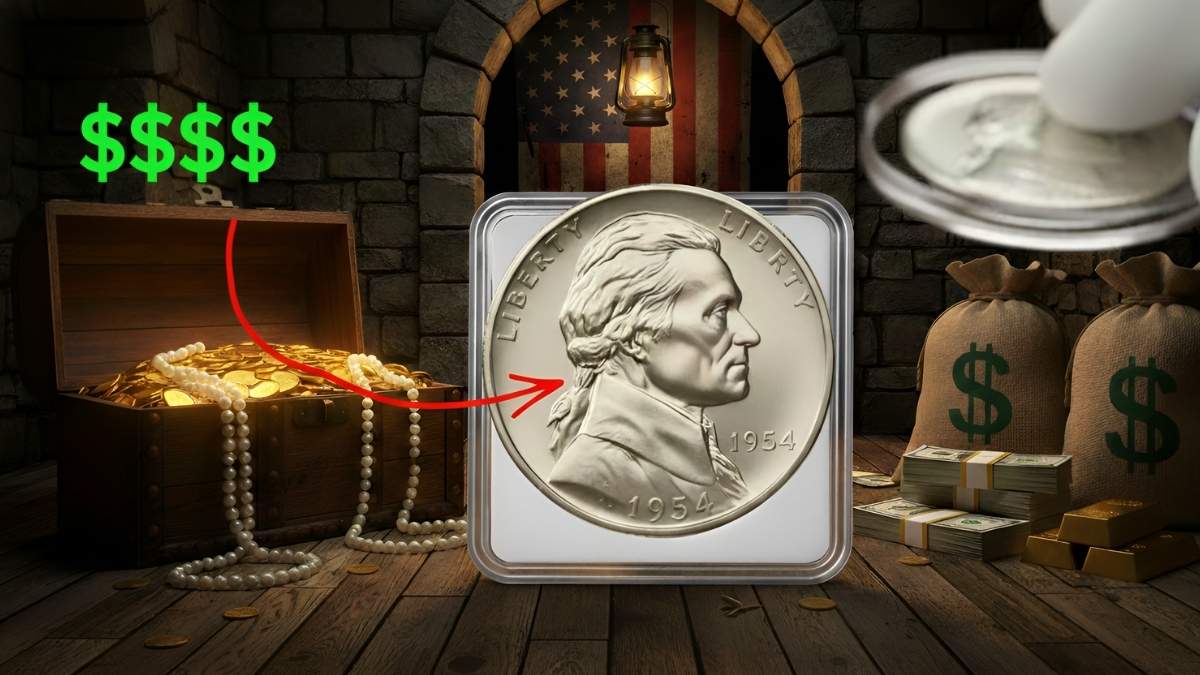
Jefferson Nickel: The Jefferson Nickel, first introduced in 1938, remains one of the most widely recognized coins in American currency. While millions have been minted over the decades, certain rare variations and minting errors have elevated even worn examples to surprising values. Collectors often overlook these coins, assuming they are too common to be valuable, yet history shows that some Jefferson Nickels can be worth far more than their face value.
Historical Background
The Jefferson Nickel was created to honor Thomas Jefferson, the third President of the United States and author of the Declaration of Independence. Designed by Felix Schlag, the coin features Jefferson’s portrait on the obverse and his home, Monticello, on the reverse. Over time, the design has undergone modifications, but the coin remains a staple in circulation.
Why Worn Coins Can Still Hold Value
Even heavily circulated Jefferson Nickels can be valuable if they belong to rare mint years or contain unique errors. Collectors prize these coins not for their condition alone but for their scarcity and historical significance. A worn coin from a rare year can still command hundreds or even thousands of dollars.
Key Dates and Rare Varieties
Several Jefferson Nickels stand out as particularly valuable:
- 1939 Doubled Monticello Reverse: A rare error where the word “Monticello” appears doubled.
- 1942 to 1945 Wartime Nickels: These coins contain 35 percent silver due to wartime metal shortages, making them highly collectible.
- 1950-D Jefferson Nickel: With one of the lowest mintages in the series, this coin is prized even in worn condition.
- 1971 No S Proof Nickel: A rare proof coin mistakenly struck without the “S” mint mark.
Identification Tips
Collectors should pay close attention to:
- Mint marks: Located on the reverse for coins minted before 1965 and on the obverse for later issues.
- Errors: Doubled dies, off-center strikes, and missing mint marks can dramatically increase value.
- Silver content: Wartime nickels with a large mint mark above Monticello contain silver and are worth more than face value.
- Condition: While uncirculated coins are most valuable, even worn examples can be worth significantly more than five cents.
Auction Records
Jefferson Nickels have achieved impressive auction results. Rare varieties such as the 1950-D in pristine condition have sold for thousands of dollars. Error coins, particularly doubled dies, have also commanded high prices, proving that even circulated coins can hold substantial value.
Collecting Strategies
For those interested in Jefferson Nickels:
- Inspect pocket change regularly, as rare varieties still appear in circulation.
- Focus on key dates and mint errors rather than condition alone.
- Preserve coins in protective holders to prevent further wear.
- Consider professional grading for coins suspected to be rare or valuable.
Cultural Significance
The Jefferson Nickel is more than just currency. It reflects American history, from wartime shortages to evolving minting technology. Collectors often view these coins as tangible connections to the past, making them valuable both financially and culturally.
Conclusion
The Jefferson Nickel proves that even worn coins can be worth more than you realize. Rare dates, minting errors, and historical significance elevate certain examples far beyond their face value. Whether discovered in pocket change or inherited from a family collection, these coins remind us that hidden treasures often lie in the most ordinary places. For collectors and enthusiasts alike, the Jefferson Nickel remains a fascinating and rewarding pursuit.