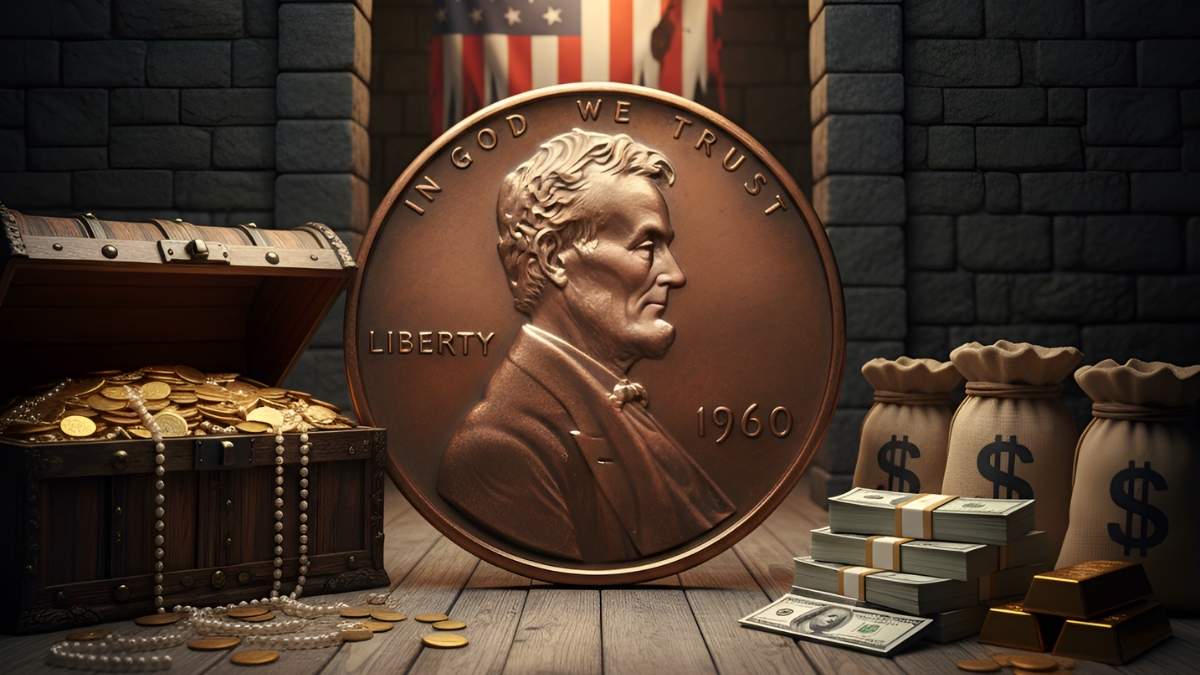
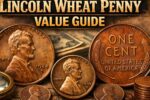
Lincoln Penny Value Chart 2026: The Lincoln Penny, first minted in 1909 to honor President Abraham Lincoln, remains one of the most collected coins in American history. Over more than a century of production, countless variations, mint marks, and rare issues have emerged, making certain pennies worth far more than their face value. In 2026, collectors continue to seek out these treasures, with some examples commanding thousands of dollars at auction.
Historical Background
The Lincoln Penny was introduced to commemorate the centennial of Lincoln’s birth. Designed by Victor David Brenner, it was the first U.S. coin to feature a real person rather than a symbolic figure. Over the decades, the design has evolved, but the penny has remained a staple of American currency.
Why Some Pennies Are Valuable
Not all Lincoln Pennies are created equal. Their value depends on several factors:
- Year of issue: Certain years had low mintages or unique designs.
- Mint mark: Coins struck at different mints (Denver, San Francisco, Philadelphia) can vary in rarity.
- Condition: Uncirculated or proof coins are worth more than worn examples.
- Errors: Minting mistakes such as doubled dies or off-center strikes can dramatically increase value.
Rare Years to Look For
Collectors prize several Lincoln Pennies above all others:
- 1909-S VDB: One of the most famous and rare pennies, with limited production in San Francisco.
- 1914-D: A low mintage coin from Denver, highly sought after even in worn condition.
- 1922 No D: A penny struck in Denver without the “D” mint mark, making it unique.
- 1955 Doubled Die: Famous for its dramatic doubling on the date and lettering.
- 1969-S Doubled Die: Another rare error coin with significant doubling.
- 1972 Doubled Die: Known for its clear doubling on the obverse.
Mint Marks and Their Importance
Mint marks play a crucial role in determining value:
- P: Philadelphia, often the most common mint.
- D: Denver, with several rare issues like the 1914-D.
- S: San Francisco, home to the legendary 1909-S VDB.
Collectors carefully examine mint marks to identify rare varieties and distinguish valuable coins from ordinary ones.
Value Chart Overview
While exact values depend on condition and market demand, a general guide for rare Lincoln Pennies in 2026 includes:
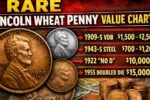
- 1909-S VDB: $1,000 to $10,000 depending on grade.
- 1914-D: $500 to $5,000.
- 1922 No D: $700 to $6,000.
- 1955 Doubled Die: $1,500 to $15,000.
- 1969-S Doubled Die: $10,000 to $50,000.
- 1972 Doubled Die: $100 to $1,000.
Auction Records
Lincoln Pennies have consistently set impressive auction records. High-grade examples of the 1909-S VDB and 1955 Doubled Die have sold for tens of thousands of dollars. The 1969-S Doubled Die, due to its extreme rarity, has reached values exceeding $50,000.
Identification Tips
Collectors should use magnification tools to inspect coins for:
- Doubling on dates and lettering.
- Missing or unusual mint marks.
- Sharpness of strike and preservation of details.
- Signs of cleaning or damage, which can reduce value.
Collecting Strategies
For those interested in Lincoln Pennies:
- Start with common dates to build a complete set.
- Focus on acquiring rare years and mint marks gradually.
- Preserve coins in protective holders to prevent wear.
- Consider professional grading for high-value specimens.
Cultural Significance
The Lincoln Penny is more than just currency. It reflects American history, from the celebration of Lincoln’s legacy to the evolution of minting technology. Collectors often view these coins as tangible connections to the past, making them valuable both financially and culturally.
Conclusion
The Lincoln Penny Value Chart 2026 highlights the importance of rare years and mint marks in determining a coin’s worth. From the legendary 1909-S VDB to the dramatic doubled die errors, these coins continue to captivate collectors and command impressive values. Whether discovered in pocket change or showcased at auction, Lincoln Pennies remind us that extraordinary treasures can be hidden in the most ordinary of places.