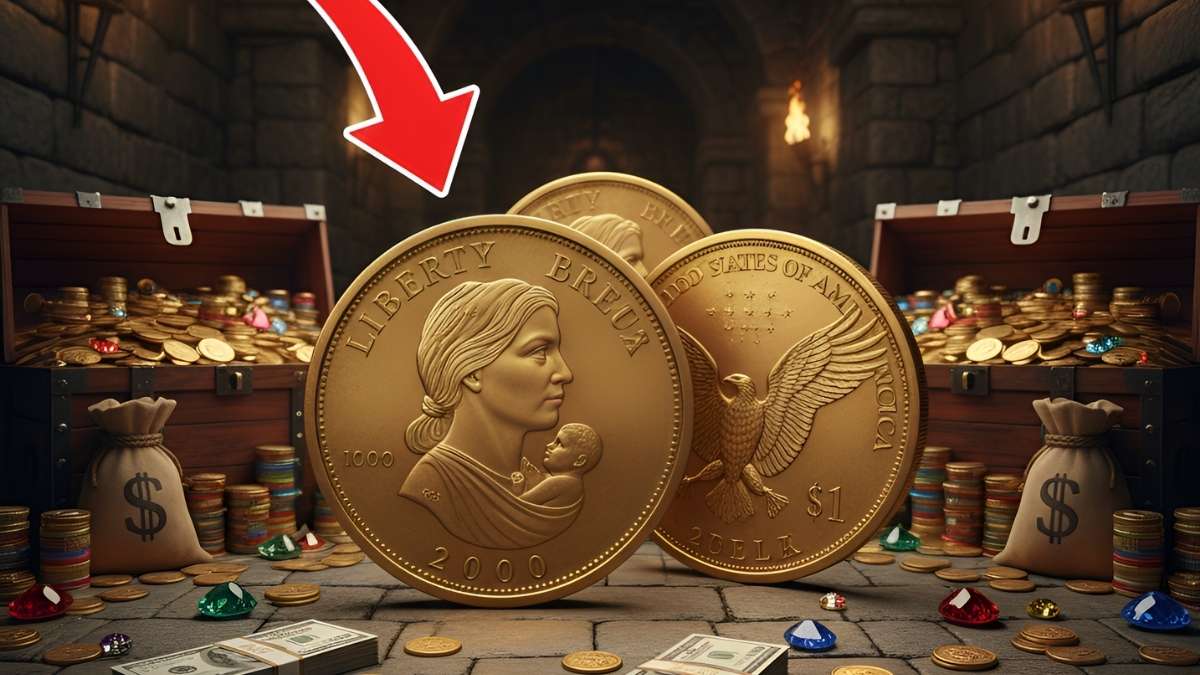
Rare 2000 Sacagawea Dollar: The Sacagawea dollar, first released in 2000, was intended to revive interest in dollar coins in the United States. Featuring Sacagawea, the Shoshone woman who guided the Lewis and Clark expedition, the coin quickly became iconic. While most examples are worth only face value, certain rare errors and varieties from the year 2000 have captured the attention of collectors and can be worth hundreds or even thousands of dollars.
The Story Behind the Sacagawea Dollar
The coin was designed to honor Sacagawea’s contribution to American history. Glenna Goodacre created the obverse design, showing Sacagawea carrying her infant son, Jean Baptiste. The reverse, designed by Thomas D. Rogers, depicts a soaring eagle surrounded by seventeen stars. The coin was minted in a golden color using a manganese brass alloy, giving it a distinctive appearance.
Why Some 2000 Sacagawea Dollars Are Valuable
Most Sacagawea dollars are common, but certain varieties and minting errors make them highly collectible. These coins stand out due to unusual production circumstances, limited runs, or mistakes that slipped through quality control. Collectors prize these anomalies because they represent rare pieces of numismatic history.
The Cheerios Dollar
One of the most famous varieties is the “Cheerios Dollar.” In 2000, General Mills partnered with the U.S. Mint to include Sacagawea dollars in Cheerios cereal boxes as a promotion. These coins were struck with a prototype reverse design featuring enhanced eagle tail feathers. Only a small number were distributed, making them extremely rare and valuable today.
Minting Errors and Varieties
Error coins from 2000 include double strikes, off‑center strikes, and coins struck on the wrong planchet. Some Sacagawea dollars were mistakenly struck on quarter planchets, resulting in undersized coins with incomplete designs. These errors are highly sought after and can command significant premiums at auction.
Proof and Special Issues
Proof versions of the Sacagawea dollar were produced for collectors, featuring polished dies and mirror‑like finishes. While most proof coins are not rare, certain varieties from 2000 with unusual characteristics or packaging errors can be worth more than standard issues.

Condition and Grading
As with all coins, condition plays a crucial role in determining value. Coins graded as mint state or proof by professional services can command significant premiums. Collectors seek coins with sharp details, strong luster, and minimal wear.
Market Trends in 2026
Interest in Sacagawea dollars remains strong among collectors. Rare varieties such as the Cheerios Dollar continue to appreciate in value, while error coins attract competitive bidding at auctions. Online marketplaces frequently feature these coins, reflecting their enduring popularity.
Everyday Change with Hidden Value
Although Sacagawea dollars are less commonly seen in circulation today, they still appear occasionally. For casual collectors, finding one in everyday change can be exciting, especially if it turns out to be a rare variety or error coin.
Tips for Collectors
Collectors should pay attention to details such as eagle tail feathers, mint marks, and strike quality when evaluating Sacagawea dollars. Proper storage is essential to preserve value, as tarnish and wear can diminish a coin’s worth. Consulting grading services and reputable dealers can help identify hidden treasures.
Conclusion
The 2000 Sacagawea dollar is more than a commemorative coin. It represents a piece of American history and, in rare cases, a hidden fortune. Varieties like the Cheerios Dollar and minting errors make these coins valuable additions to any collection. In 2026, they continue to capture the imagination of collectors, proving that everyday change can hold extraordinary treasures.