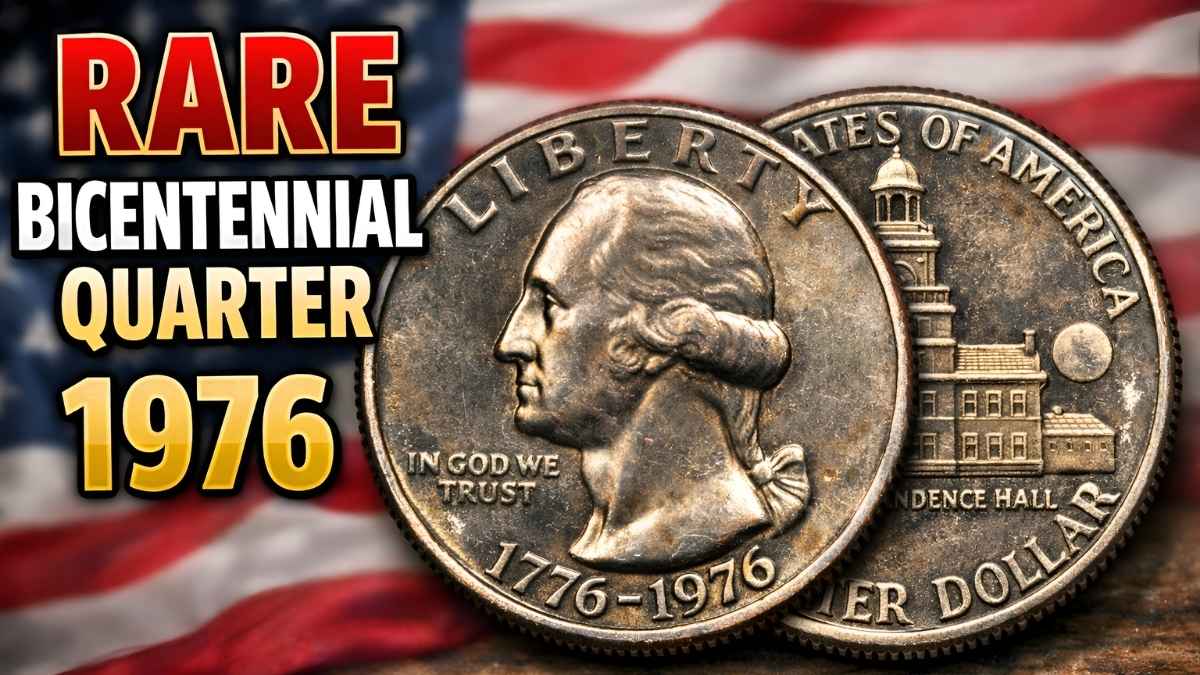
Rare Bicentennial Quarter 1976: The 1976 Bicentennial quarter is one of the most iconic coins in American numismatics. Issued to celebrate the 200th anniversary of the United States, it features a unique reverse design with a colonial drummer and a torch surrounded by 13 stars. While most Bicentennial quarters are worth only their face value, certain rare varieties and minting errors have become highly sought after by collectors. Some of these rare examples have been reported to reach values in the millions, making them legendary in coin collecting circles.
Historical Background
The Bicentennial quarter was part of a special coinage program that included the quarter, half dollar, and dollar. These coins were minted in 1975 and 1976, but all bear the dual date “1776‑1976.” The design was created to honor America’s independence and remains one of the most recognizable commemorative issues in U.S. history.
Identifying Rare Bicentennial Quarters
Collectors look for specific features that set rare Bicentennial quarters apart from common circulation strikes. Key identifiers include:
- Mint Marks: Coins struck at the Denver (D) and San Francisco (S) mints can carry higher value, especially proof and silver issues.
- Silver Composition: Special collector sets included 40 percent silver quarters, which are more valuable than copper‑nickel versions.
- Errors and Varieties: Double die obverse, off‑center strikes, and other minting errors can dramatically increase value.
- Condition: Coins graded Mint State (MS) or Proof (PR) by professional grading services are worth significantly more.
The $3.2 Million Claim
Stories of Bicentennial quarters valued at $3.2 million often refer to extremely rare error coins or unique specimens. While most Bicentennial quarters are worth between 25 cents and a few dollars, rare examples with exceptional errors or provenance can command extraordinary sums at auction. Collectors should be cautious, as only authenticated coins with certified rarity can reach such values.
Value Chart Overview
- Common Circulation Strike: 0.25 to 1 USD.
- Uncirculated MS65: 10 to 20 USD.
- Silver Proof: 15 to 50 USD depending on grade.
- Rare Errors: Hundreds to thousands of dollars.
- Unique or Legendary Specimens: Reported values in the millions, though these are extremely rare and often tied to auction records.
How Collectors Claim Value
To realize the potential value of a rare Bicentennial quarter, collectors must:
- Authenticate the Coin: Submit to professional grading services such as PCGS or NGC.
- Verify Rarity: Ensure the coin has recognized errors, silver composition, or unique provenance.
- Auction or Private Sale: Rare coins often achieve record prices through major auction houses or private collectors.
- Documentation: Maintain records of grading certificates and provenance to support valuation.
Collecting Strategies
- Search coin rolls and collections for silver issues or minting errors.
- Focus on high‑grade examples with minimal wear.
- Build complete Bicentennial sets including quarter, half dollar, and dollar.
- Stay informed about auction results and market trends.
Conclusion
The 1976 Bicentennial quarter remains a beloved piece of American coinage history. While most examples are common, rare varieties and minting errors can transform an ordinary coin into a collector’s treasure. Claims of values reaching $3.2 million highlight the excitement and potential of numismatics, but only authenticated and truly rare specimens achieve such legendary status. For collectors, the Bicentennial quarter is both a nostalgic keepsake and a reminder of the thrill of discovering hidden value in everyday change.