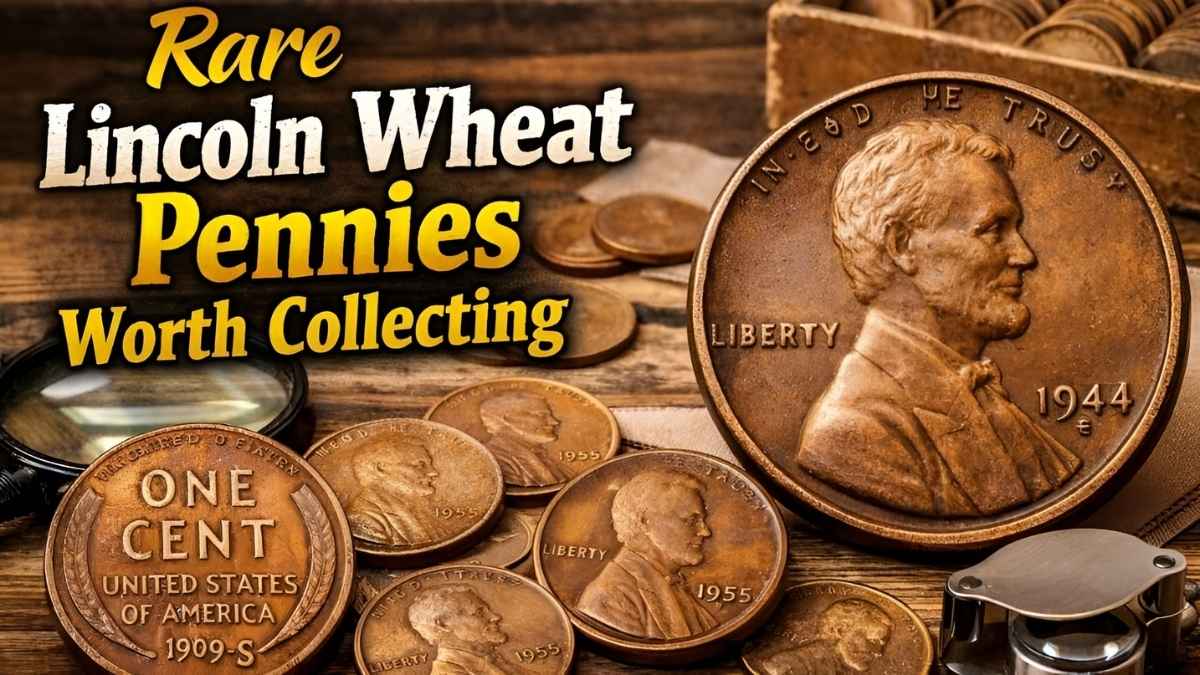
Rare Lincoln Wheat Pennies Worth Collecting: The Lincoln Wheat penny is one of the most beloved coins in American numismatics. First introduced in 1909 to honor the centennial of Abraham Lincoln’s birth, it quickly became a staple of everyday currency and a favorite among collectors. While most Wheat pennies are worth only a few cents, certain rare varieties and conditions have made some examples worth hundreds, thousands, or even more.
The Legacy of the Lincoln Wheat Penny
The Wheat penny was minted from 1909 until 1958, featuring Lincoln’s portrait on the obverse and two wheat stalks on the reverse. It was the first regular-issue coin to feature a real person rather than a symbolic figure, marking a turning point in American coin design. Its long production run and historical significance make it a cornerstone of coin collecting.
Why Wheat Pennies Are Valuable
Not all Wheat pennies are rare, but specific factors can dramatically increase their value. Coins with low mintage numbers, minting errors, or unique varieties are highly sought after. Condition also plays a major role, with uncirculated examples commanding far higher prices than worn coins.
Key Dates and Varieties
Some Wheat pennies stand out as particularly valuable due to their rarity. Examples include the 1909-S VDB, the 1914-D, and the 1922 no D variety. These coins are considered key dates in the series and are often the centerpiece of collections. Other varieties, such as doubled dies or off-center strikes, also attract strong interest from collectors.
Value Chart for Rare Wheat Pennies
| Year and Variety | Estimated Value (Good Condition) | Estimated Value (Mint State) |
|---|---|---|
| 1909-S VDB | $700+ | $2,000–$3,000+ |
| 1914-D | $150+ | $3,000–$5,000+ |
| 1922 No D | $500+ | $10,000–$15,000+ |
| 1931-S | $75+ | $1,000+ |
| 1955 Doubled Die | $1,000+ | $10,000–$15,000+ |
Values vary depending on condition, rarity, and demand, but these examples illustrate the potential worth of certain Wheat pennies.
The Role of Condition and Grading
Professional grading services evaluate coins based on their preservation, assigning grades that reflect quality. A Wheat penny in mint state, with sharp details and no signs of wear, can be worth exponentially more than one that has circulated heavily. Collectors often seek coins graded at the highest levels, as these represent the best examples of their kind.
Collectors’ Interest in Wheat Pennies
Wheat pennies remain popular because they are accessible yet historically significant. Many collectors begin their numismatic journey by searching for Wheat pennies in circulation or old collections. The thrill of discovering a rare variety or high-grade example keeps interest alive across generations.
How to Identify Valuable Wheat Pennies
Collectors can identify valuable Wheat pennies by checking the date, mint mark, and overall condition. Coins with unusual features such as doubled lettering, missing mint marks, or off-center strikes should be examined closely. Consulting a professional grading service or numismatic expert can confirm authenticity and value.
Market Demand for Rare Pennies
The market for rare Wheat pennies is strong, with auctions and private sales often featuring exceptional examples. Prices realized for key dates and varieties continue to rise, reflecting both historical importance and collector demand.
Conclusion
The Lincoln Wheat penny is more than just a piece of currency. It is a symbol of American history and a reminder that extraordinary value can sometimes be found in ordinary places. While most Wheat pennies are worth only a few cents, rare varieties and pristine examples can be worth thousands. For collectors and enthusiasts, the excitement lies in the search, and the Wheat penny remains one of the most captivating coins to check in your collection.